In logistics discussions, the terms shipping company, freight forwarder, and logistics provider are frequently used as if they describe the same function. They do not.
Each represents a distinct role within the supply chain, governed by different incentives, responsibilities, and degrees of control. Confusing them leads to misplaced expectations, accountability gaps, and operational risk.
This editorial explains how these entities differ, how they interact, and why understanding their boundaries matters.
What a Shipping Company Actually Does
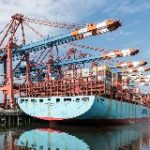
A shipping company is an asset-based operator. Its primary function is to move cargo using owned or chartered vessels, aircraft, vehicles, or rail assets.
Key characteristics of shipping companies include:
Ownership or control of transport assets
Network-based operations across defined trade lanes
Capacity management as a core commercial lever
Limited direct interaction with individual cargo owners
Shipping companies optimise networks, not individual shipments. Their decisions are shaped by fleet utilisation, port access, alliance commitments, and regulatory constraints.
When cargo is booked with a shipping company, it enters a system designed for scale rather than customisation.
The Freight Forwarder’s Role: Control Without Assets
Freight forwarders do not typically own vessels or aircraft. Instead, they operate as intermediaries who design, coordinate, and manage cargo movement across multiple carriers and modes.
Their core functions include:
Carrier selection and routing strategy
Documentation and customs coordination
Consolidation and deconsolidation of cargo
Risk management and exception handling
A freight forwarder’s value lies in control and visibility. They translate the complexity of shipping company networks into manageable solutions for cargo owners.
In many cases, forwarders act as the primary operational interface between businesses and shipping companies.
Logistics Providers: System Integrators
Logistics providers operate at a broader scope. They integrate transportation, warehousing, inventory management, and distribution into a single operational framework.
Their responsibilities often include:
End-to-end supply chain design
Warehouse and distribution centre management
Technology platforms for visibility and planning
Multi-country coordination
Unlike freight forwarders, logistics providers may own some assets while outsourcing others. Their role is not just movement, but optimisation across the entire supply chain lifecycle.
They are typically engaged through long-term strategic relationships rather than transactional bookings.
Control, Responsibility, and Accountability
One of the most important distinctions lies in where control sits.
Shipping companies control:
Freight forwarders control:
Logistics providers control:
Supply chain architecture
Inventory positioning
Performance metrics across nodes
Technology and data integration
Accountability often breaks down when these control boundaries are misunderstood.
Commercial Incentives and Conflicts
Each entity operates under different commercial incentives.
Shipping companies prioritise:
Asset utilisation
Rate stability
Network efficiency
Freight forwarders prioritise:
Service reliability
Margin management
Customer retention
Logistics providers prioritise:
Understanding these incentives helps explain why decisions sometimes feel misaligned from a cargo owner’s perspective.
Contracts and Legal Relationships
The legal relationship differs depending on which entity you contract.
Shipping companies issue transport contracts governed by international conventions that limit liability.
Freight forwarders may act as:
Agents, arranging transport on behalf of the shipper
Principals, issuing their own house bills of lading
Logistics providers typically operate under master service agreements covering multiple functions and jurisdictions.
These distinctions affect liability, insurance coverage, and dispute resolution.
When Each Role Makes Sense
Shipping companies are most effective when:
Cargo fits standard network parameters
Volume is high and predictable
Cost efficiency outweighs flexibility
Freight forwarders add value when:
Shipments are complex or variable
Multiple carriers or modes are required
Active exception management is needed
Logistics providers are appropriate when:
Supply chains span multiple countries
Inventory and transport must be coordinated
Long-term optimisation matters more than individual shipment cost
No single role replaces the others. They coexist within the same ecosystem.
Why Confusion Persists
The logistics industry often blurs terminology. Marketing language, overlapping services, and digital platforms contribute to the confusion.
However, operational reality remains consistent. Assets move cargo. Intermediaries manage complexity. Integrators design systems.
Recognising these roles allows businesses to assign responsibility correctly and plan more effectively.
Understanding the System, Not the Labels
Effective logistics decisions come from understanding how shipping companies, freight forwarders, and logistics providers interact, not from choosing one label over another.
Each plays a necessary role. The challenge is knowing when to engage which, and why.
Clarity reduces friction. Understanding reduces risk.